What Are the Differences Between Ultrasonic Rotary Vibrating Sifter and Ordinary Vibration Sifter
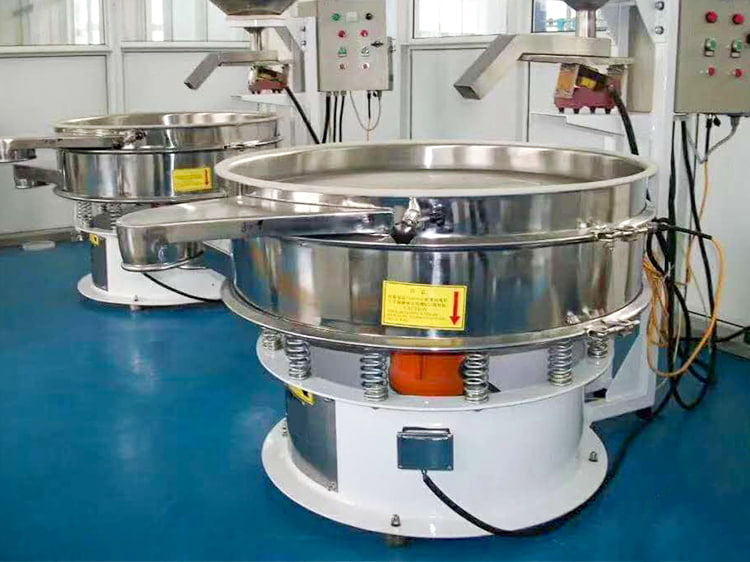
Ultrasonic rotary vibrating sifters represent a major advancement in precision powder screening. Compared with ordinary vibration sifters, they deliver higher accuracy, reduced mesh clogging, and improved material flow. Whether used in pharmaceuticals, chemicals, or metal powder processing, the Audop Ultrasonic Rotary Vibrating Sifter offers exceptional efficiency and reliability for modern production needs.
In modern powder processing, screening plays a crucial role in ensuring product quality and production efficiency. However, not all vibrating sifters are created equal. While both ultrasonic rotary vibrating sifters and ordinary vibration sifters serve to separate materials based on particle size, the technology, performance, and application range between the two are quite different. Let’s take a closer look at how they differ—and why one might be more suitable for your operation than the other.
1. The Working Principle: Ordinary Vibration vs. Ultrasonic Precision
An ordinary vibration sifter relies solely on mechanical vibration generated by a motor with eccentric weights. These vibrations cause materials to move across the screen surface, allowing smaller particles to pass through while larger ones remain on top.
In contrast, the ultrasonic rotary vibrating sifter integrates ultrasonic technology on top of traditional vibration. A high-frequency ultrasonic generator transmits sound waves to the mesh screen, creating micro-vibrations that effectively prevent mesh clogging and improve screening precision.
If you’ve ever struggled with fine powders clogging your screens, the Audop Ultrasonic Rotary Vibrating Sifter might just be your perfect solution.
2. Screening Accuracy: Micron-Level Differences
Ordinary sifters are suitable for general powders with particle sizes above 100 microns. But when dealing with ultrafine, sticky, or electrostatic materials such as pharmaceutical powders, metal powders, or fine chemicals, clogging is a common problem that reduces efficiency.
Ultrasonic sifters, however, can handle particles as fine as 20 microns or even smaller. The ultrasonic vibrations help break static bonds and reduce screen blocking, resulting in higher accuracy and more consistent product quality.
The ultrasonic vibrating sifter is an upgraded model based on the traditional rotary vibrating sifter, featuring an advanced ultrasonic screening system. While an ordinary vibration sifter operates at around 1,460 vibrations per second, the ultrasonic model reaches an impressive 36,000 vibrations per second.
This powerful combination of ultrasonic sound waves and mechanical vibration—characterized by low amplitude and high frequency—greatly enhances screening performance. It allows the ultrasonic vibrating sifter to efficiently separate fine powders ranging from 20 to 300 microns, offering exceptional results especially for difficult-to-screen materials such as sticky, electrostatic, or ultrafine powders.
With its superior precision and reliability, the ultrasonic vibrating sifter is an ideal choice for industries that demand high-quality fine powder screening, including pharmaceuticals, chemicals, and metal powder processing.
3. Throughput and Efficiency
At first glance, one might assume that adding ultrasonic energy could slow down the screening process—but the opposite is true. The additional vibration energy disperses materials more evenly, increases throughput, and minimizes downtime due to cleaning.
In contrast, ordinary sifters often require frequent cleaning to maintain efficiency, which interrupts production and increases labor costs.
4. Mesh Life and Maintenance
The ultrasonic system’s fine, high-frequency vibrations reduce mechanical friction between the powder and the mesh. This extends mesh life significantly compared to ordinary sifters, where continuous abrasion can cause wear and tear over time.
Additionally, ultrasonic sifters are easier to clean because materials are less likely to stick to the screen surface. This makes them ideal for industries that require high hygiene standards, such as food, pharmaceuticals, and chemicals.
5. Application Range
Ordinary vibration sifters are perfect for bulk materials, coarse particles, and general industrial use—think flour, sand, or plastic pellets.
Ultrasonic rotary sifters shine in high-value applications where precision matters most. Industries such as battery materials, metal powders, fine chemicals, and pharmaceutical manufacturing often choose the Audop Ultrasonic Rotary Vibrating Sifter for its ability to deliver cleaner cuts and finer separation.
6. Cost vs. Long-Term Value
There’s no denying that ultrasonic sifters come with a higher initial cost. However, they save money in the long run by reducing maintenance, minimizing product loss, and improving screening efficiency. For manufacturers processing fine or expensive materials, the investment pays for itself quickly.
Conclusion
In short, while ordinary vibration sifters are great for general-purpose screening, ultrasonic rotary vibrating sifters are built for precision, efficiency, and challenging materials. If your process involves ultrafine powders or high-quality screening standards, upgrading to an ultrasonic model could transform your production line.
After all, in the world of powder processing, precision isn’t just about separating particles—it’s about separating success from mediocrity.